Week 1 is the week everybody bets on feel. Nobody has film on anything yet obviously, so people fall back on what they have always believed. The over because everyone is healthy, the home dog because the crowd is loud, the Florida team because it is hot. I ran every opener since 1999 to find the closing line and the result, and ranked the common Week 1 angles strongest to weakest.
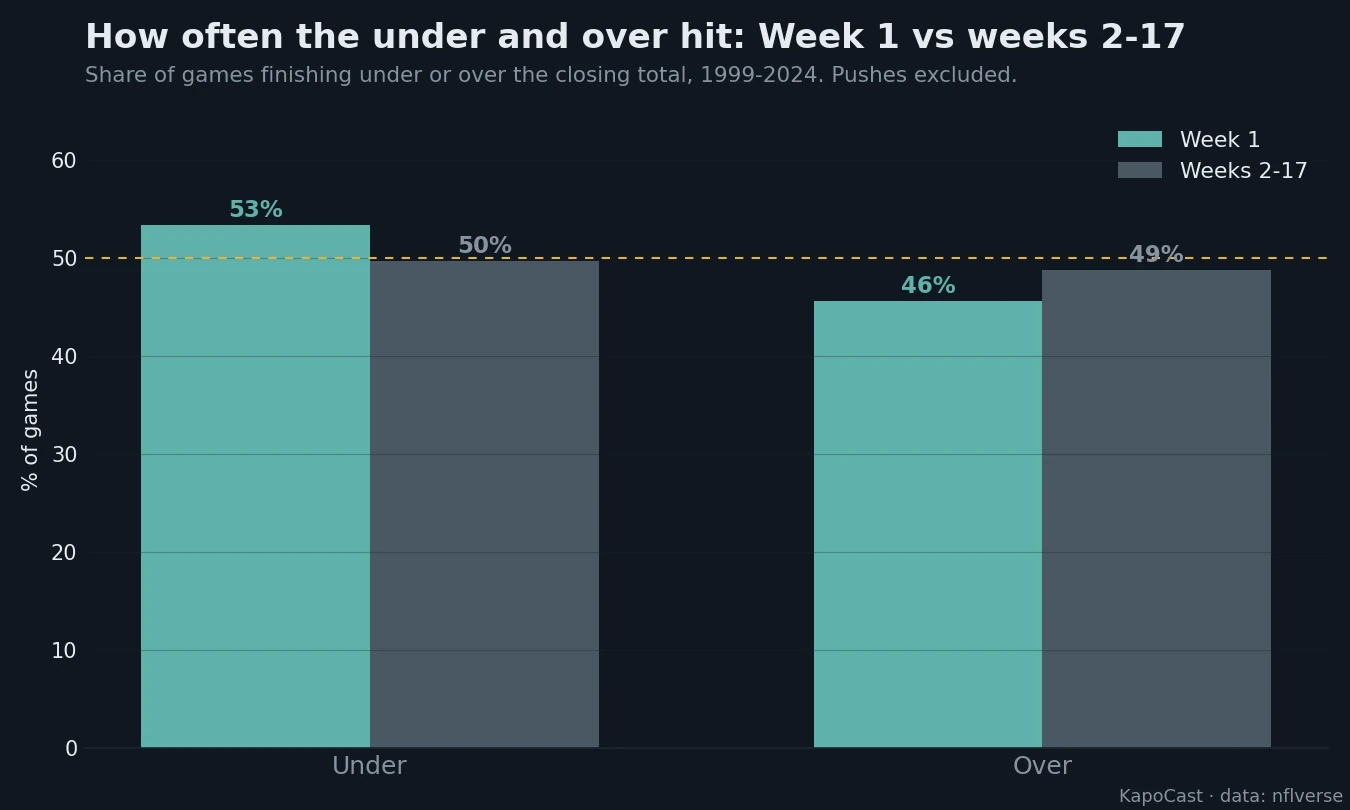
1. Take the Under
Openers go under the total 53% of the time. The rest of the season it is 50%, and 53% matters because it clears the 52.4% you need to beat standard juice at -110. It is the only angle on this list that does. Offenses are not ready in September, and openers average 43 points a game against 44 the rest of the year.
2. Back the Coaches Who Are Good in Openers
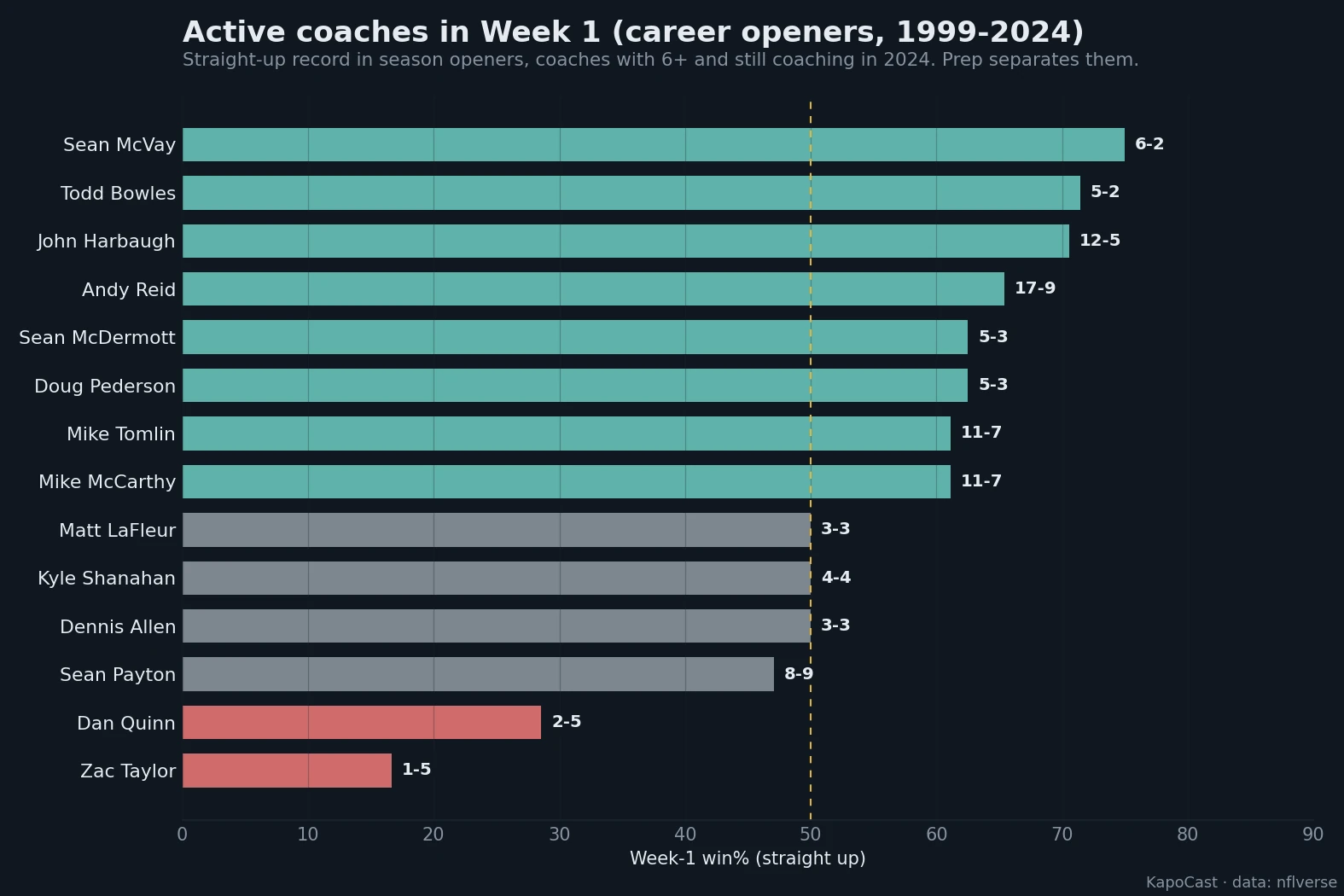
A season opener is the one game a staff gets a full offseason to prepare for, and the coaches who prepare well turn that into wins year after year. Andy Reid is 17-9 in openers. Sean McVay is 6-2, John Harbaugh is 12-5. At the other end, Zac Taylor is 1-5 and Dan Quinn is 2-5. A coach who wins 70% of his openers across a decade is doing something the spread does not fully price. Reid treats an opener like a game off the bye, with a summer of scripted plays saved for it, and the record shows.
3. Fade the New Coach Straight Up
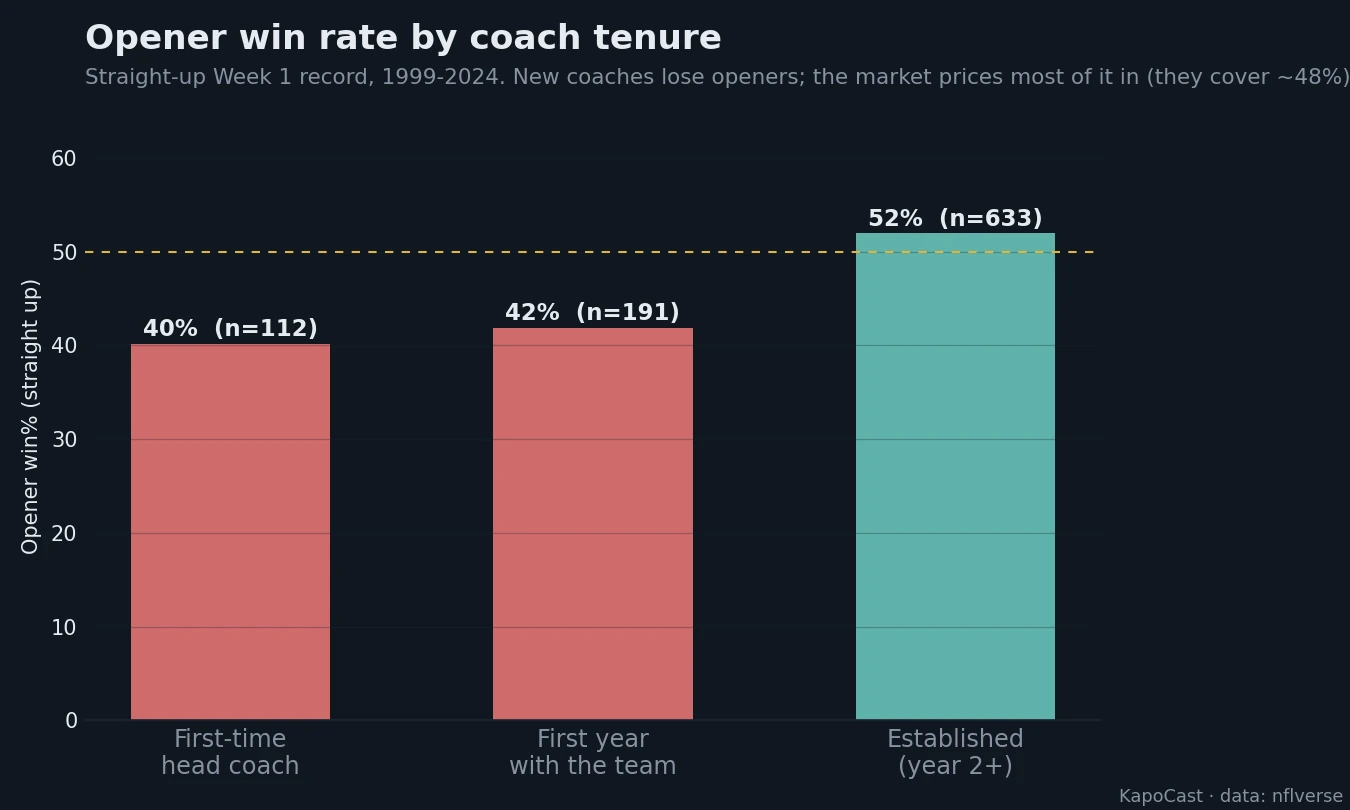
The coach angle runs the other way too. A coach in his first game with a new team wins the opener 42% of the time, and a first-time head coach wins it 40%. Established staffs win 52%. New scheme, new roster, no shared habits when something goes wrong. There is a catch for bettors. The market mostly knows this, and so those teams still cover about 48% of the time, so the value against the spread is thin. The straight-up read is the useful one here. If you want to know which teams are starting 0-1, start with the ones that just changed coaches.
4. Expect a Tight, Low-Scoring Game
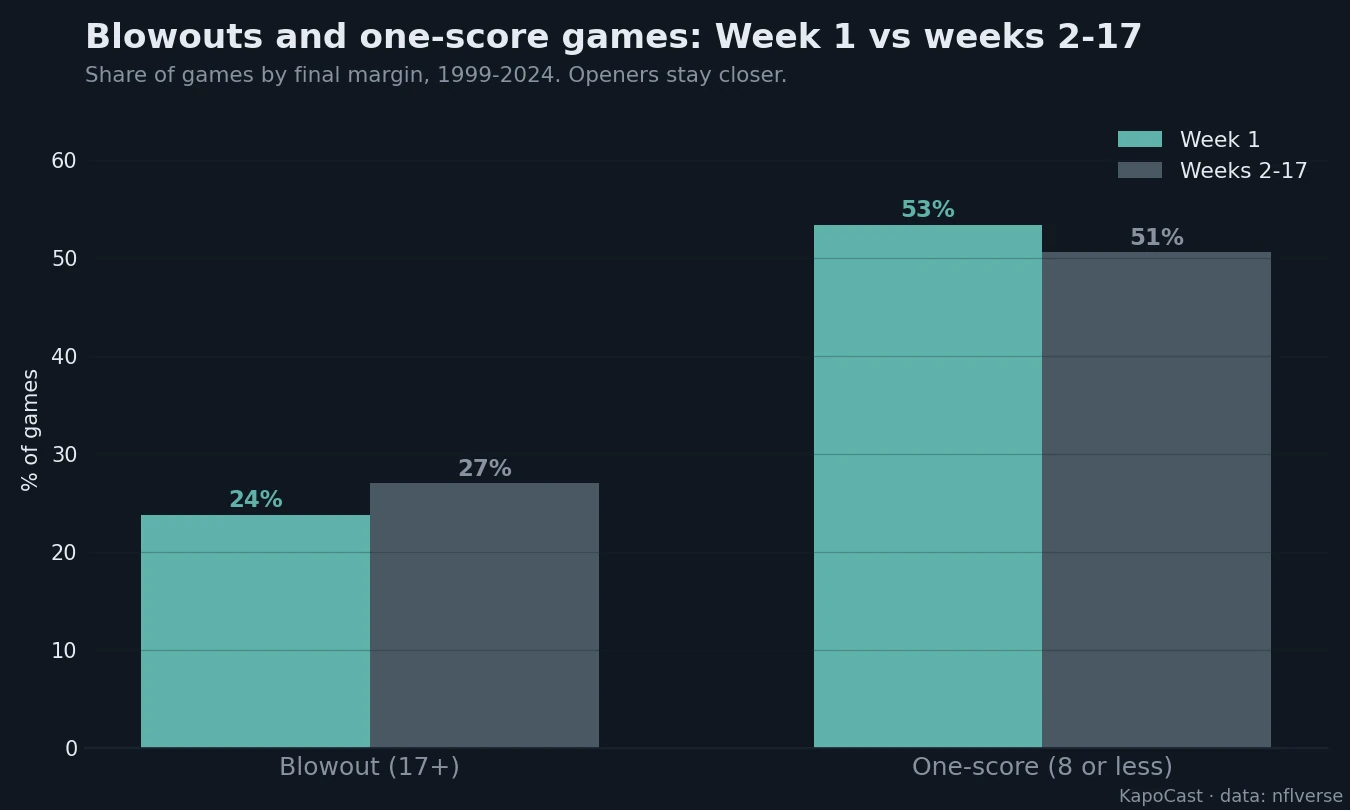
Openers stay close. Only 24% of Week 1 games are decided by 17 or more, against 27% the rest of the year, and 53% finish within one score, against 51% later. Books already leans this way, the average Week 1 spread is 4.6 points against 5.4 the rest of the season, so this is not a blind bet on the underdog. The typical opener is a one-score game that lands under the total, and a Week 1 line that expects a blowout deserves a second look. Favorites still win about 65% of openers outright, they just do it by less.
5. Lean the Dog, but Make It the Road Dog
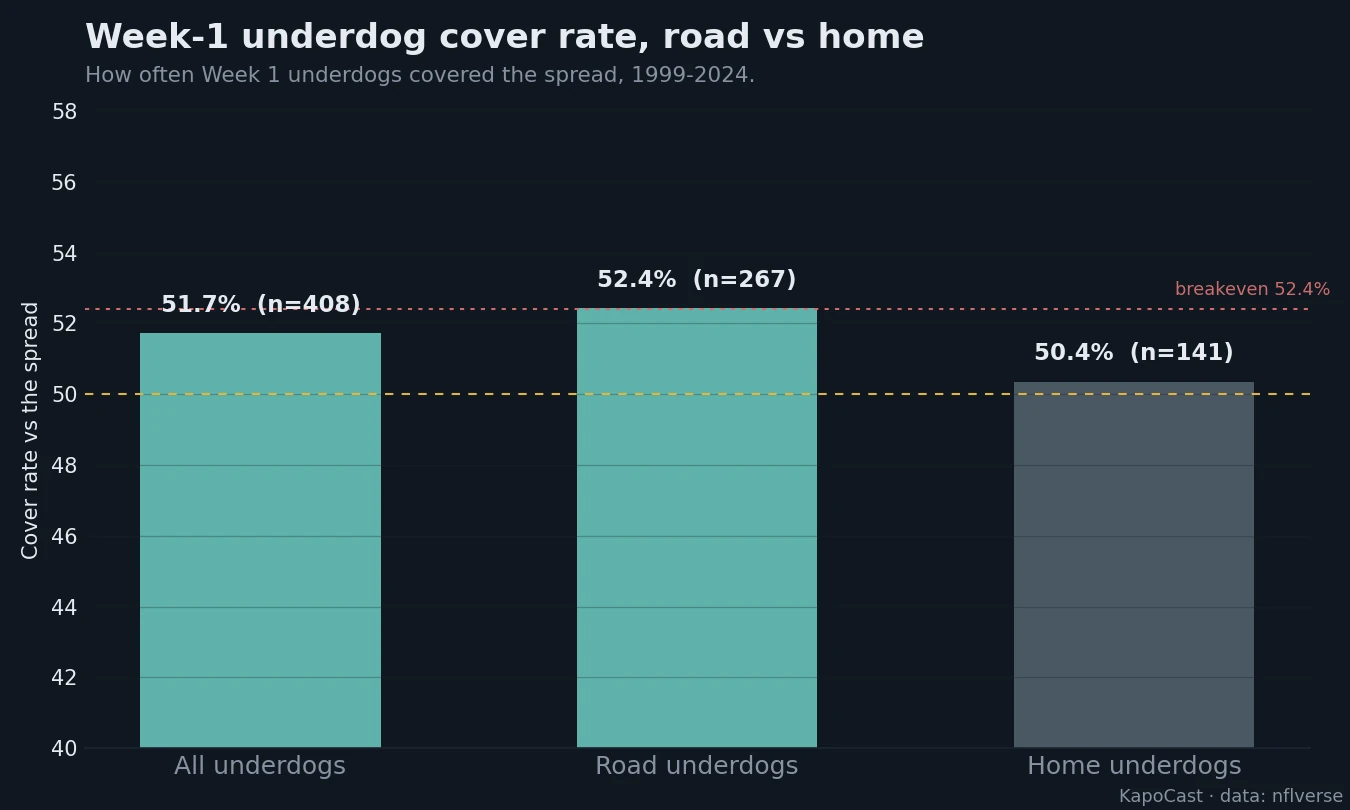
Underdogs cover 51.7% of openers. The useful part is the split. Road dogs cover 52.4% on 267 games, and home dogs cover 50.4% on 141. The classic Week 1 play is the home dog, and it is the weaker half. The book bakes home field into the number, so a home underdog is already getting fewer points than a road underdog in the same spot. If you are taking points in Week 1, take them with the team that got on a plane.
6. Don’t Overrate Home Field
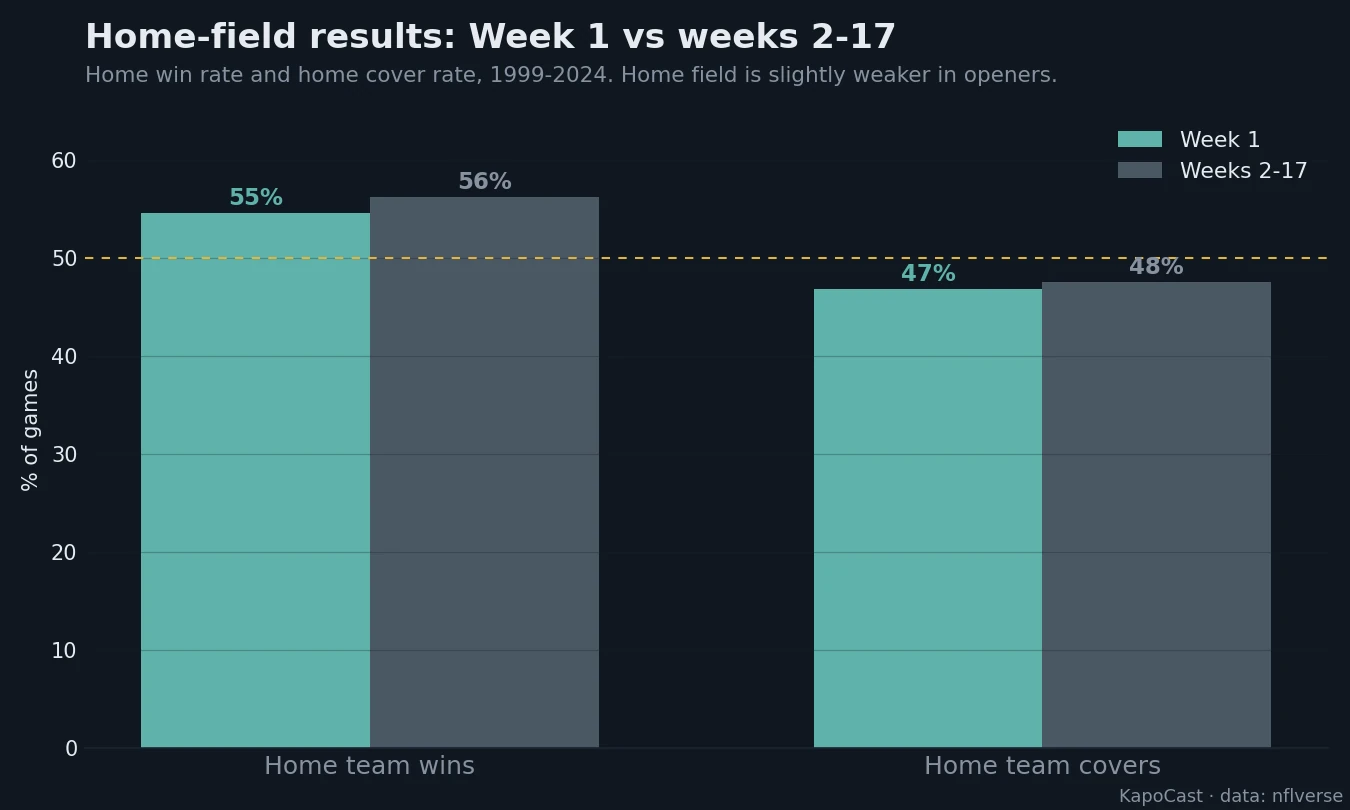
Home field is a little weaker in Week 1, not stronger. Home teams win 55% of openers against 56% the rest of the season, and they cover under 47% of the time. The road team in Week 1 has fresh legs, no injuries stacked up, and no short week behind it. Do not give the home team an extra point in your head because it is the opener.
7. Know Which Franchises Show Up in Week 1
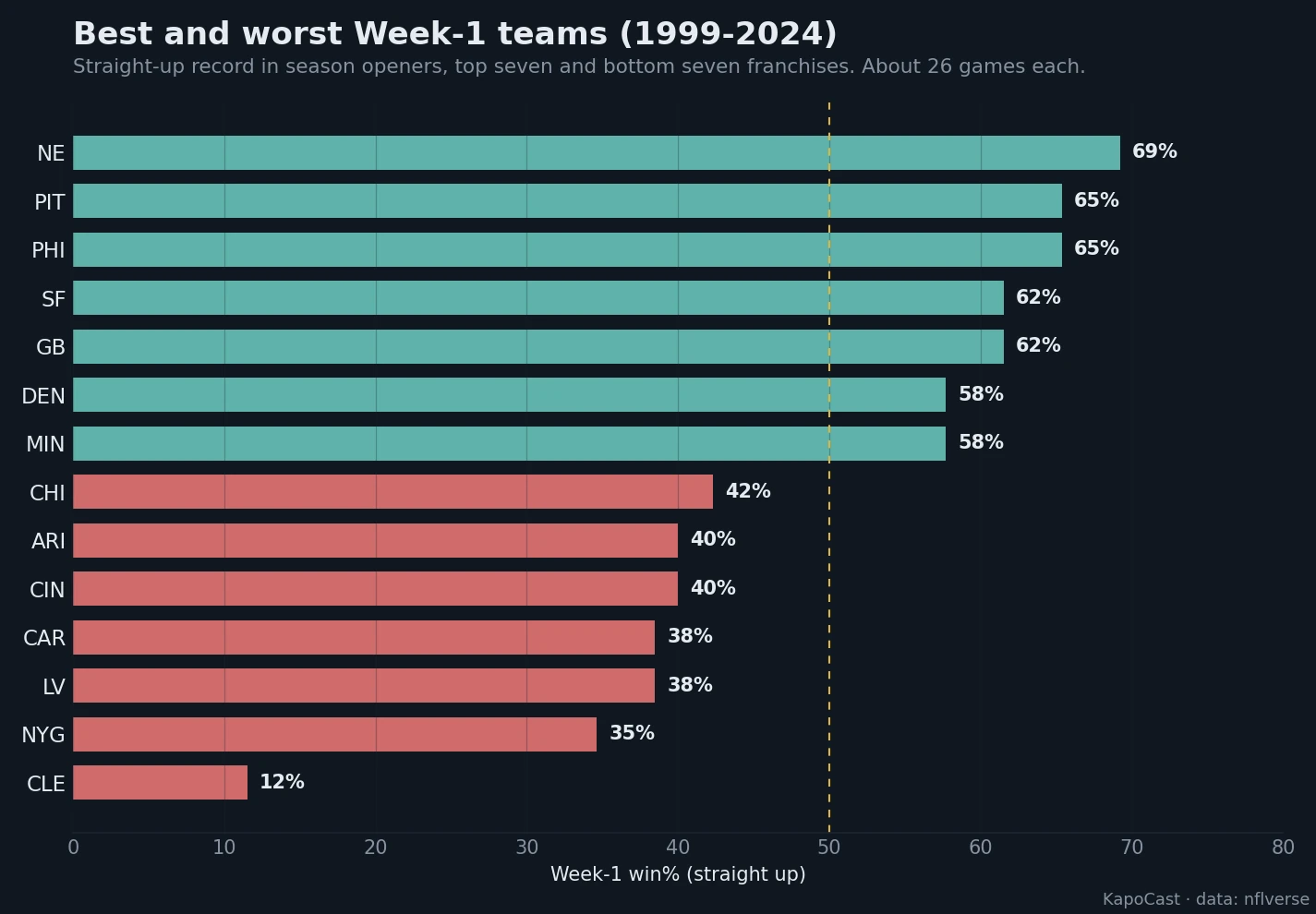
Some teams start well every year and some never do. New England has won 69% of its openers since 1999, and Philadelphia and Pittsburgh have each won 65%. Cleveland is last at 12%. The Browns have played 26 openers in that stretch and won three, with one tie and 22 losses. The extremes are different, and coaching explains most of it. New England had Bill Belichick for 24 of those 26 openers. Cleveland ran through ten full-time head coaches.
8. The Dan Quinn Is a Myth, Don’t Bet It
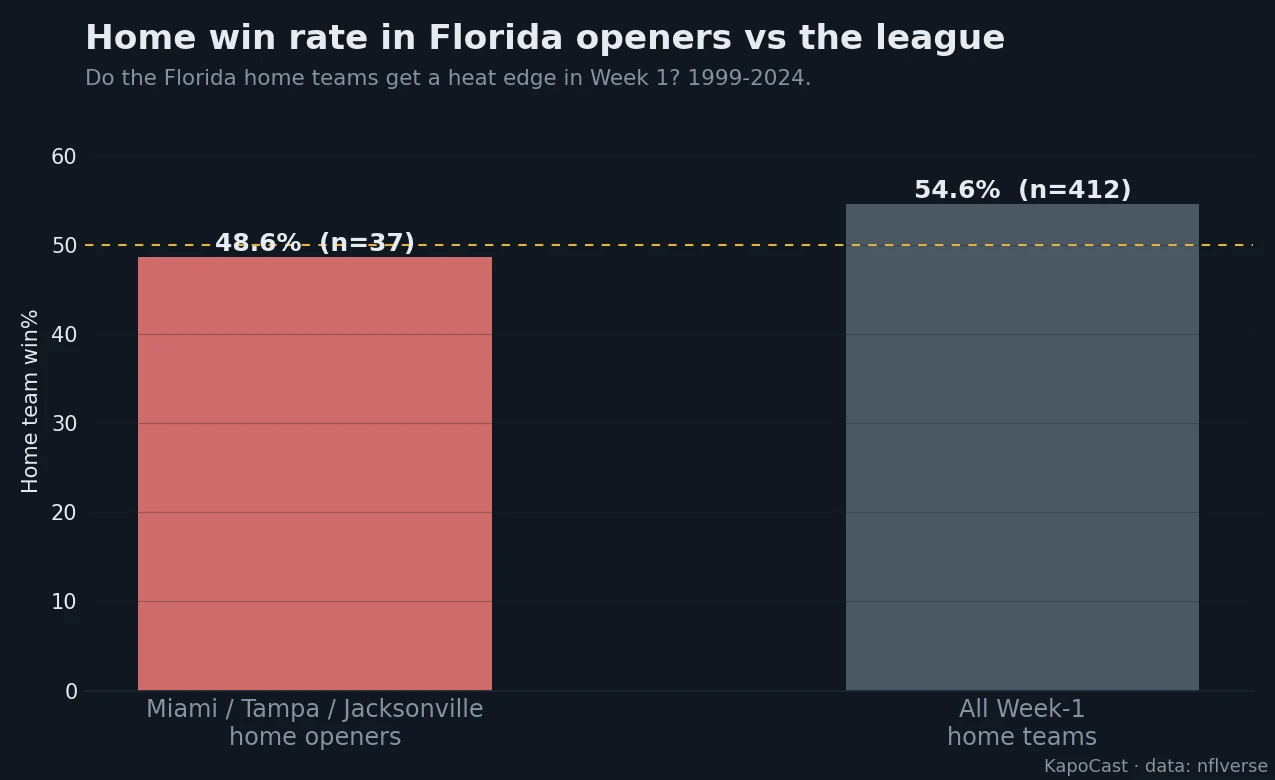
I was listening to Bill Simmons this week and he said it flat out, road teams have problems going down South and playing in the heat in September. It should be easy to see. If the heat wears out visitors, Miami, Tampa, and Jacksonville should win their home openers more often than a normal home team does. They win them less. Those three are 18-19 at home in Week 1 since 1999, a 48.6% win rate, against 55% for home teams league-wide. The road team in those games wins 51.4% of the time. The heat is real. It just does not decide games, and if anything the Florida home team has been the wrong side.
Conclusion
Here is how it shakes out. Two angles have a real edge, the under and the coach. Three more are worth a lean, the tight game, the road dog, and the franchises that reliably start fast or slow. The rest is folklore, the over, the home dog, the heat, the sloppy-game turnovers, and none of it holds up. One last number. Teams that win in Week 1 finish with about nine wins on average and teams that lose finish with about seven, and 47% of Week 1 winners reach ten wins against 22% of the losers. Bet the top of the list and leave the bottom alone.