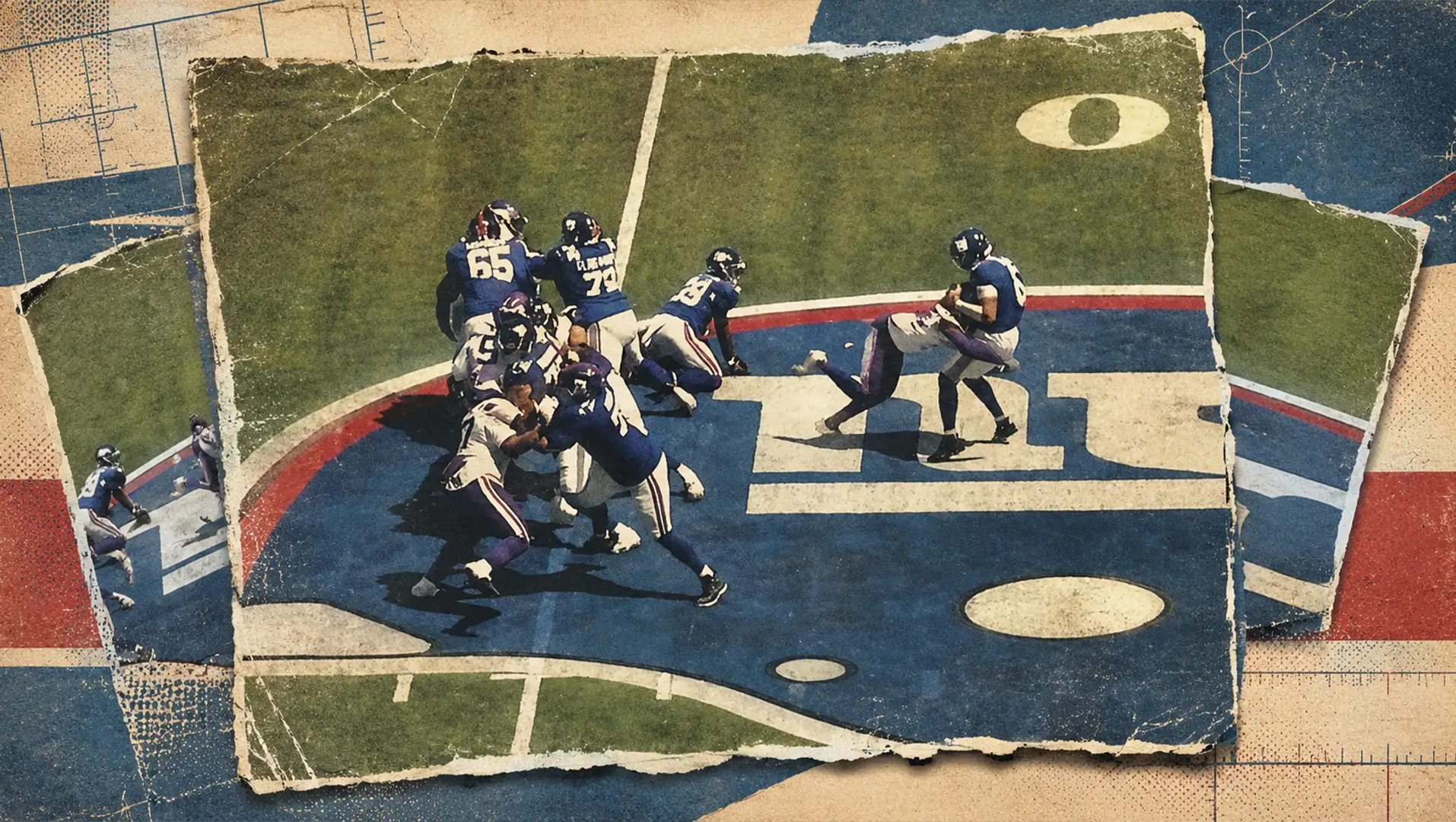
Jaxson Dart’s first NFL preseason series lasted six plays and went five yards, and the snap everyone should have been talking about wasn’t the focus. It wasn't a throw at all. Third-and-10, his RB and Dart has the one clean out every quarterback has. The sideline, and permission to throw it away. He doesn’t take it. He drifts, he hangs on, waiting for something that isn’t coming, and Dallas Turner turns it into seven-yard sack that kills the drive. Throwaway declined, punt earned…
He wasn’t finished. Next possession, safety Jay Ward comes downhill and blows him up for an eight-yard loss, and Dart gets up slow, the kind of slow that sends the spotters sprinting, and off he trots to the blue medical tent. It's become an issue for him, as he let it be known after the game. Sixth trip to that tent going back to last year, if you’re keeping count, and the Giants clearly are. Then, he steps back onto the field one snap later and drops a 15-yard touchdown into Malachi Fields like it never happened.
That’s the whole article in a single series. A quarterback with obvious tools who cannot, will not, get rid of the ball, standing behind a line that can’t buy him the half-second to figure out why. It would be easy to file it under “raw rookie” or "bad line" and move on. I don’t think it’s that simple, because when you pull the last twenty-five years of data, Dart isn’t an outlier. He’s the newest face of a league-wide habit that’s been worsening.
The Offensive Lines Didn’t Get Worse
The reflex, when a quarterback keeps eating dirt, is to blame the five guys in front of him. So start there. If pass protection had collapsed over the last two decades, we’d see it in the sack rate, and we don’t. Since 2000 the share of dropbacks that end in a sack has bounced around in a tight little band between six and seven percent, and it’s sitting almost exactly where it started.
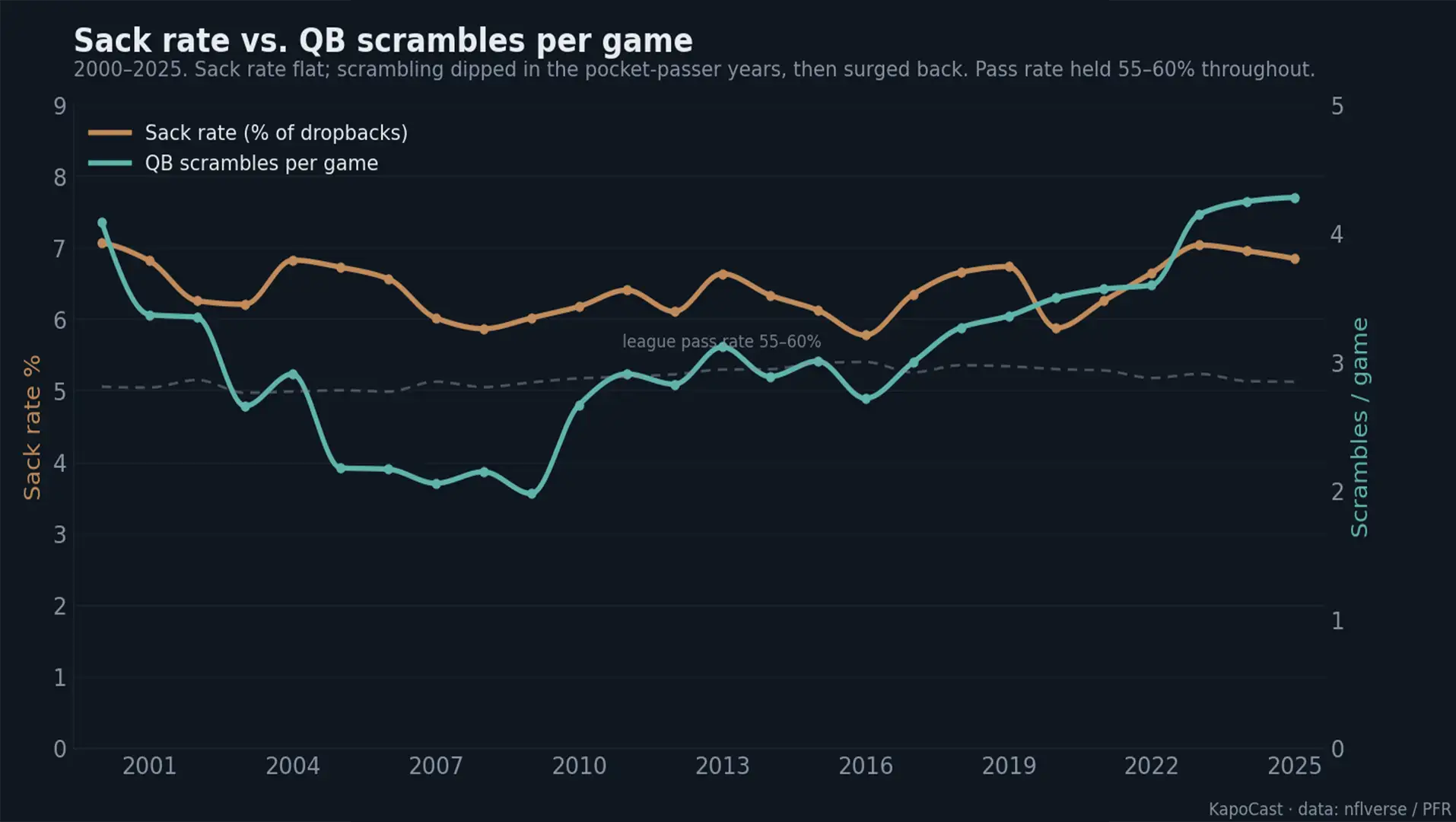
The flat bronze line is the sack rate. Twenty-five years and no trend. What moved is the amount of scramblers per game, and we’ll get to that. For now the point is simple: blockers are giving up sacks at the same clip they always have, on a league pass rate that’s held between 55 and 60 percent the whole time, so none of what follows is a “teams just pass more now” take.
That’s the league as a single number, though, and a single number hides a lot. Protection quality is spread all over the map, the best pass-blocking teams give up sacks at barely half the rate of the worst, and that spread has stayed the whole way through.
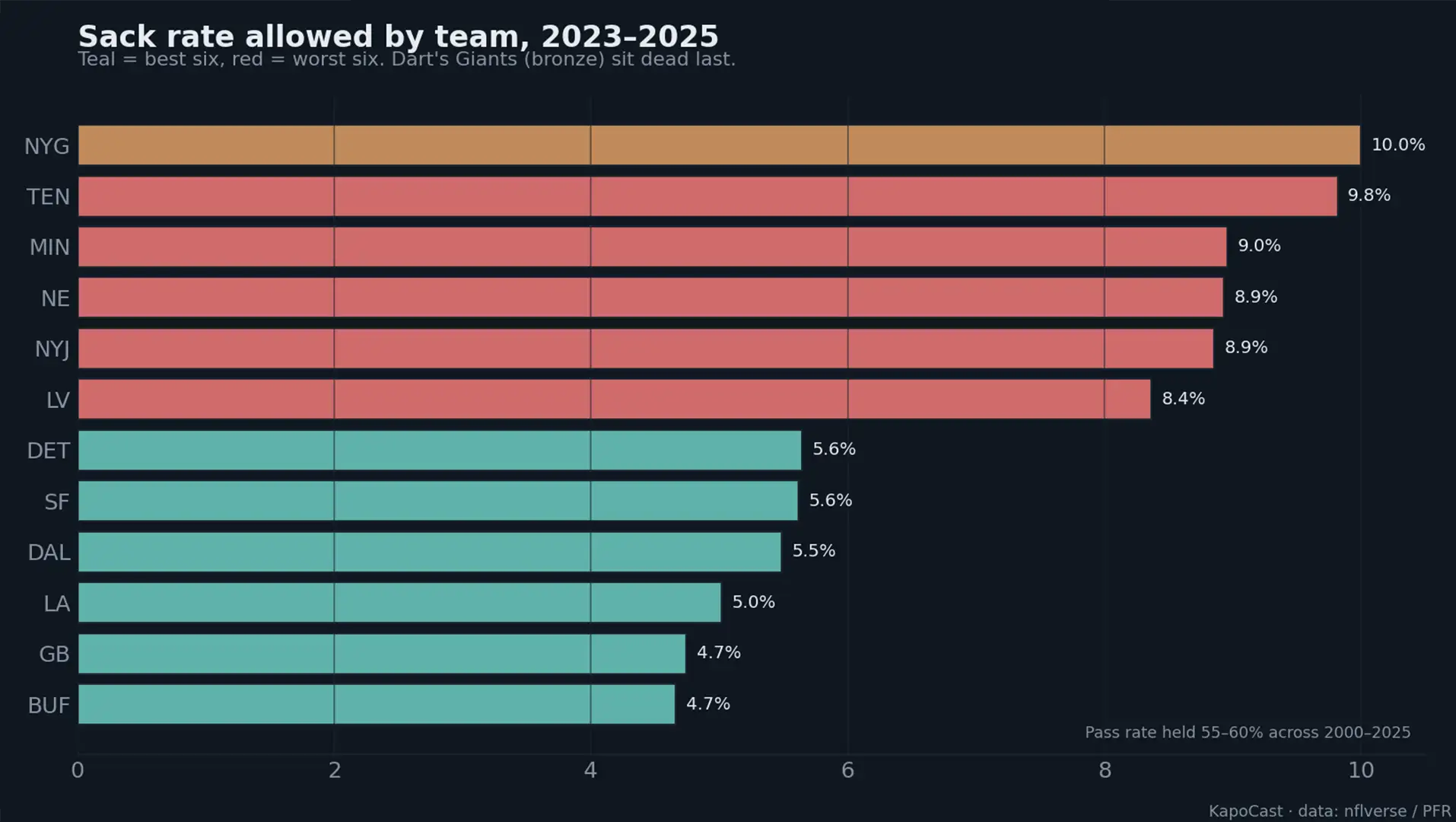
Here’s the trap: A low sack rate might mean a great line, or it might mean a quarterback who gets rid of the ball before anyone can get home. A high one might be five beaten blockers, or one guy who won’t stop holding it. A clean pocket and a quick release look identical here, and a leaky line and a statue look identical too. You cannot pull the blocker apart from the passer with public numbers, and anyone who tells you otherwise off a spreadsheet is skipping the important part.
The Quarterback Changed
If the line held and the sacks didn’t spike, what did change? How long the ball sits in the quarterback’s hand...
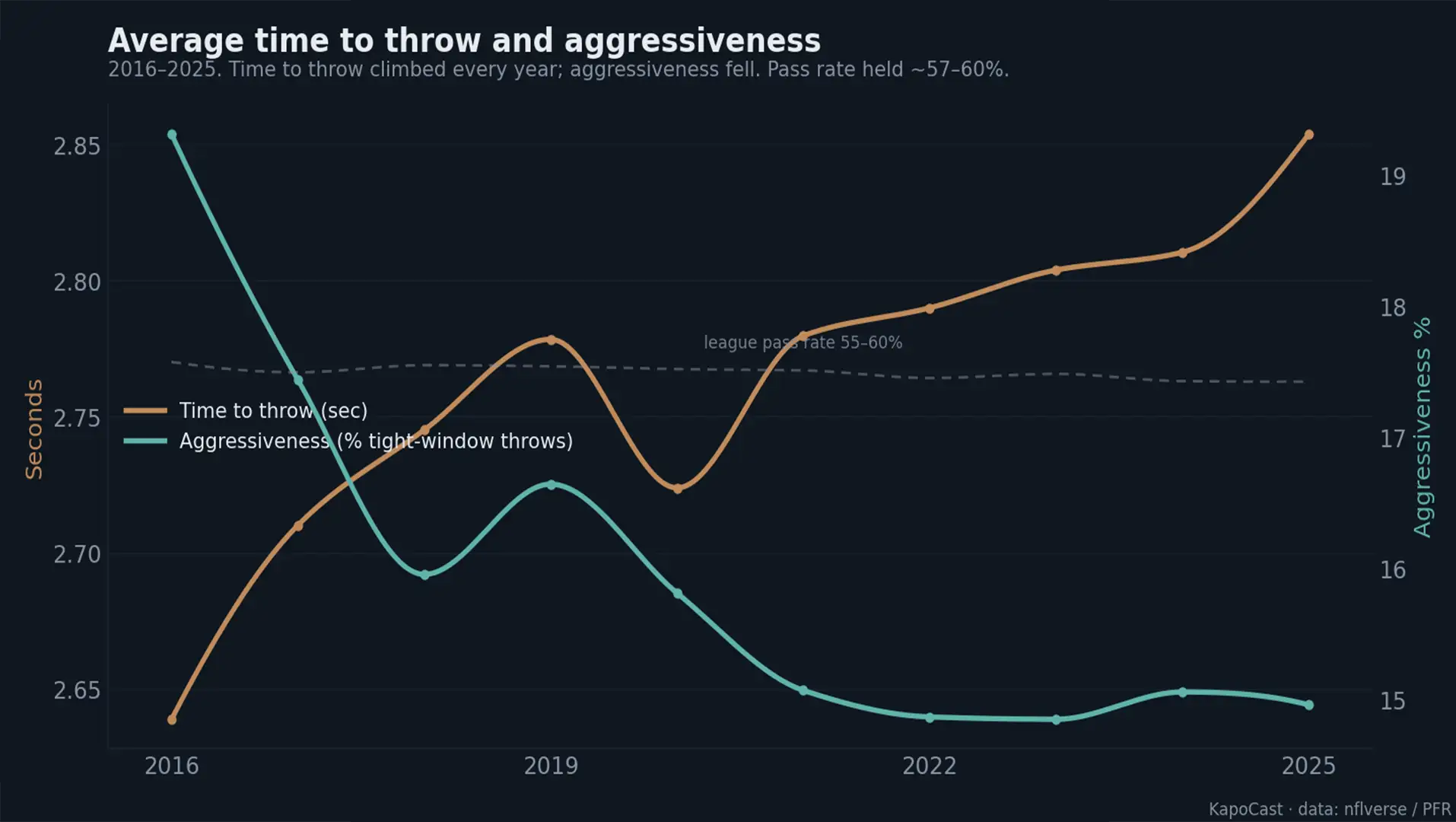
Average time to throw has crept up every single season the tracking data exists, from about 2.64 seconds in 2016 to 2.85 in 2025. That sounds like nothing. It is not nothing. Two-tenths of a second is the difference between a clean throwing lane and a defensive end in your chest, and it’s gotten longer while quarterbacks have simultaneously gotten less aggressive, throwing into tight windows less often than they used to. So it isn’t that guys are holding the ball to rip bolder throws. They’re holding it and then checking down, or holding it and eating it.
You can see the cost of that in the interceptions.
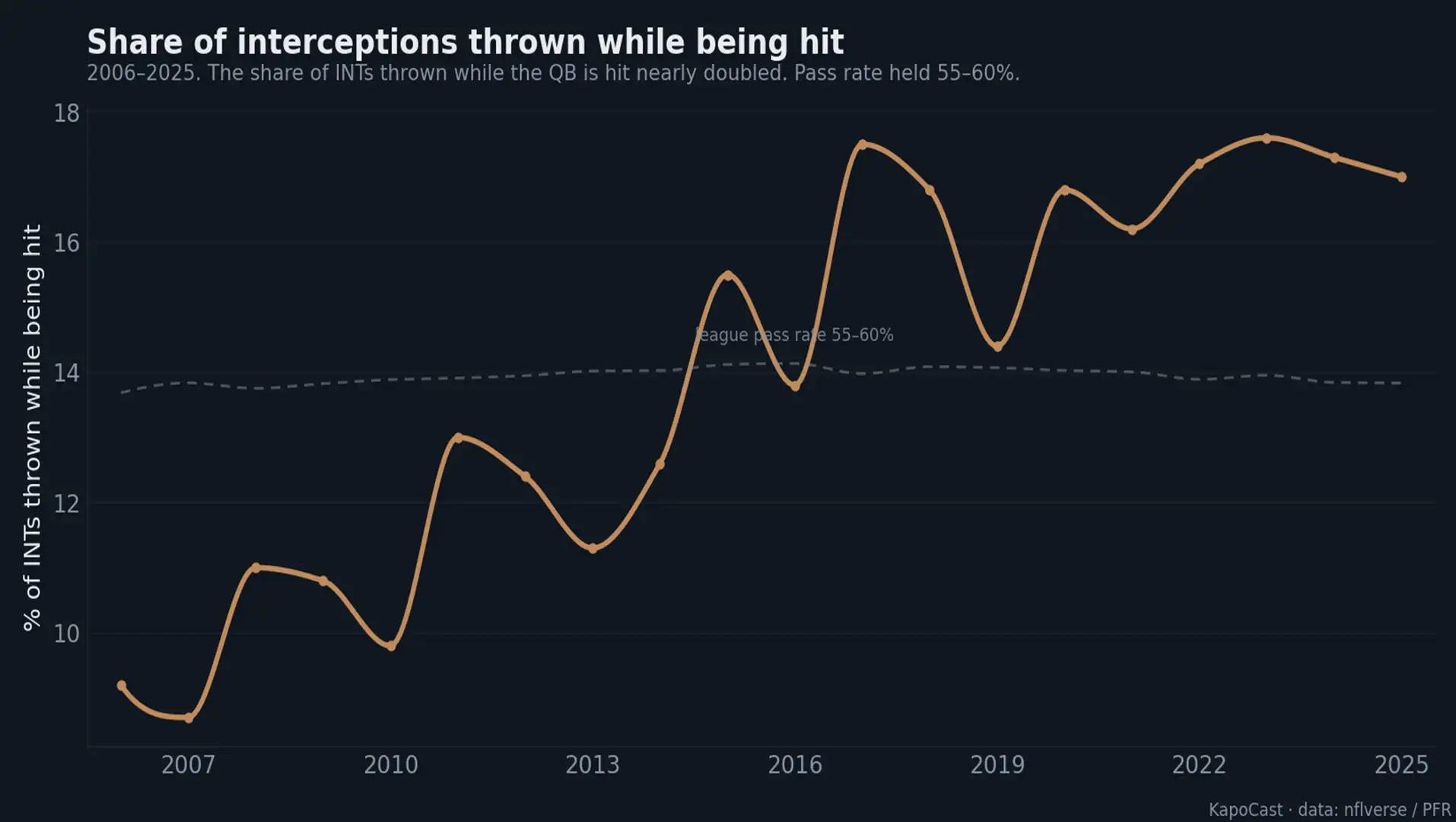
Twenty years ago, roughly one in eleven interceptions came with the quarterback getting hit as he threw. Now it’s closer to one in six. More of the picks are pressure picks, the ugly ones, the ball fluttering out because a defender arrived a beat before the decision did. That’s the JT O’Sullivan point, and if you’ve ever watched him break down a rep on The QB School, it’s the drum he beats all the time. Most sacks and a lot of the turnovers happen a full second before contact, in the quarterback’s eyes and feet, when he’s late off his first read and won’t reset.
The Scrambling Quarterback Came Back
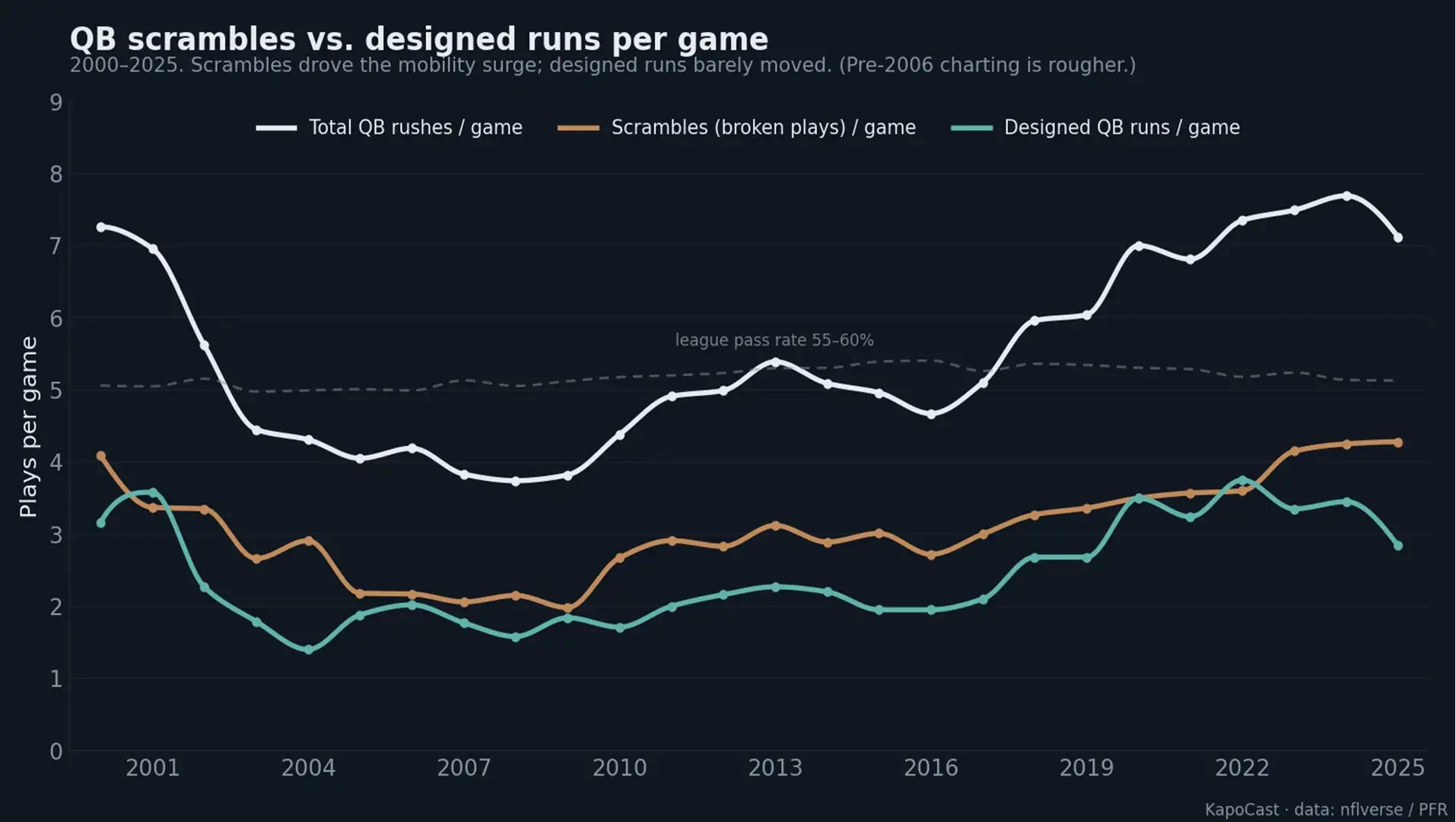
The popular story is that mobile quarterbacks “took over” the league sometime around Lamar Jackson. The data says something more interesting. Scrambling was already high in the early 2000s, the Michael Vick and prime Steve McNair years, then it cratered through the pure-pocket-passer peak of Manning and Brady, and then it came roaring back. From the late-2000s bottom it’s more than doubled. And crucially, that rise is almost entirely scrambles, broken pass plays where the quarterback bails, not designed runs. The teal line, the schemed keepers and quarterback draws, has barely budged and actually dipped last year. So the mobile quarterback didn’t finally arrive, QBs are leaving the pocket more often on plays that were supposed to be passes.
That’s the connective tissue to everything else here. A scramble is a dropback that broke down. Twice as many of them as fifteen years ago, on the same sack rate and the same pass rate, means the pocket is failing, or being abandoned, far more often than the sack numbers alone let on.
The Rookies Who Won’t Let Go
Which brings us back to the kids, because they are the tip of this spear.
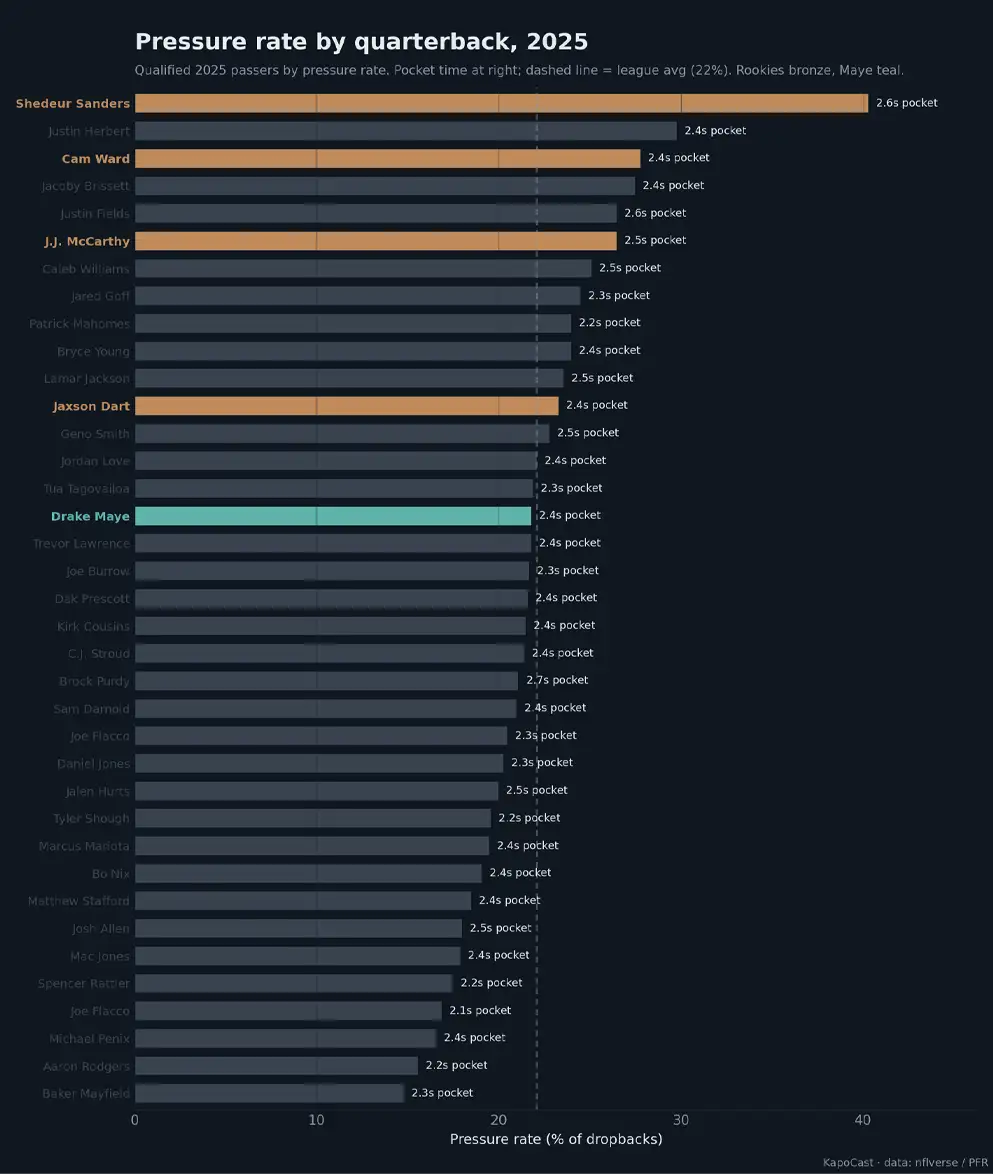
The bronze bars, the rookies, and McCarthy in his first real year pile up at the top of the pressure list. Shedeur Sanders got pressured on a staggering forty percent of his dropbacks, the highest mark in football, while sitting in the pocket longer than almost anyone. Cam Ward, Jaxson Dart, and J.J. McCarthy are all above the league line, and all of them threw below their expected accuracy while they were down there. The lone exception is the one bar in teal: Drake Maye held it just as long and landed well below average pressure, with the best accuracy-over-expected in the group.
And these QBs wear it, physically:
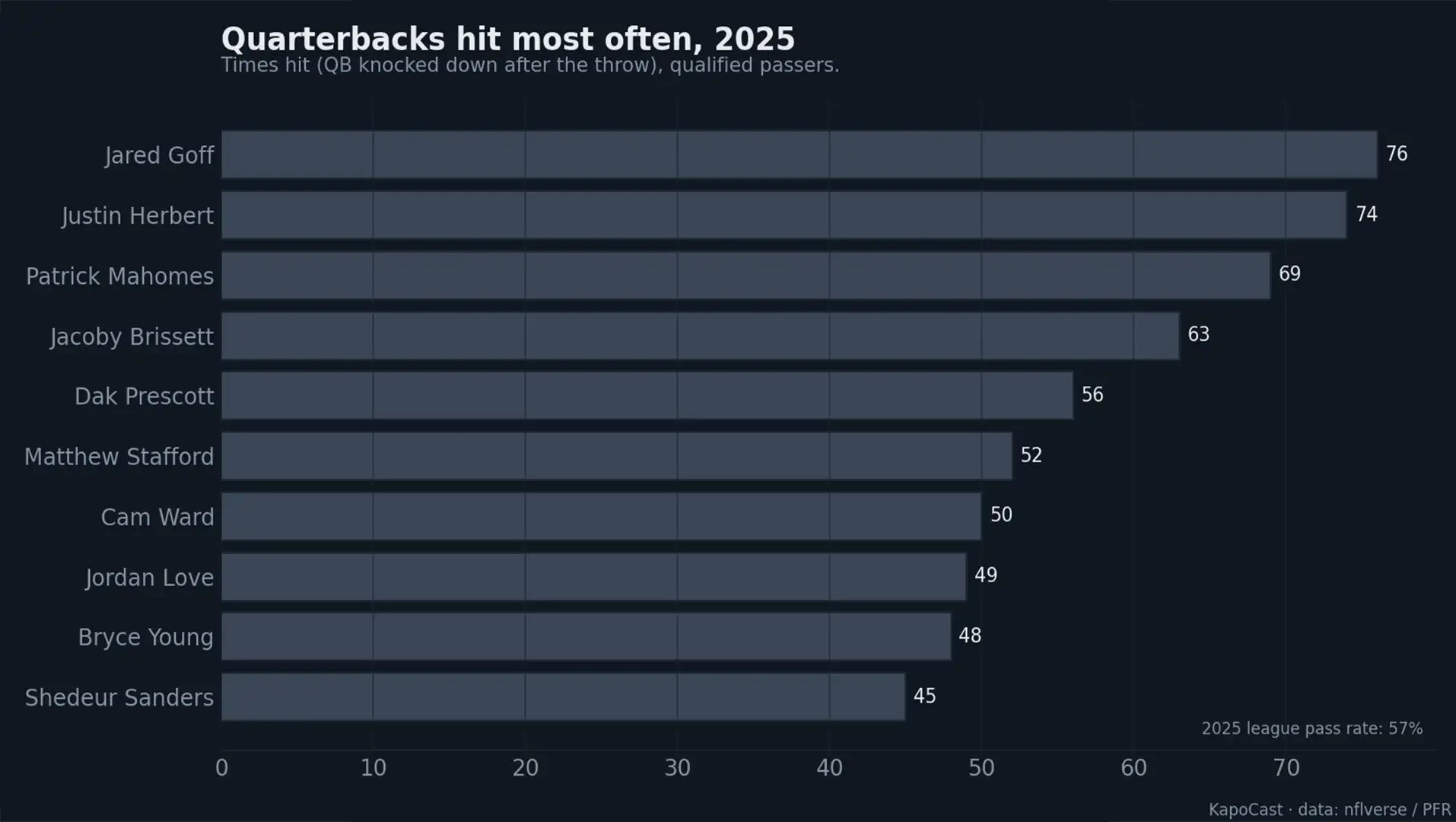
Here’s the 2025 rookie class, by the numbers, which is really the story of the same flaw at four different volumes:
- Shedeur Sanders — 40.3% pressure rate, longest average pocket time of any rookie, 45 hits on just 212 attempts.
- Cam Ward — 27.8% pressure, 172 total pressures, 67 hurries, the highest-volume in the group.
- J.J. McCarthy — 26.5% pressure, and a bad-throw rate over 21%.
- Jaxson Dart — 23.3% pressure, 36 hits, minus-two accuracy over expected, and six medical-tent trips.
- Drake Maye — held it just as long, and threw plus-nine over expected. Played terribly all playoffs, including many fumbles.
So Whose Fault Is It
This is the question the raw numbers can’t answer on their own. A pressure rate is a joint stat. It belongs partly to the blocker who got beat, partly to the scheme that may have left him on an island, and partly to the quarterback who turned a two-second problem into a four-second one. The only tools that cleanly separate those, ESPN’s pass-block win rate, the PFF grades, Thorn’s film study, are either proprietary or done by hand, one rep at a time. Anyone selling you a tidy “it’s the line” or “it’s the quarterback” off a spreadsheet is skipping the allof the important stuff in the story.
What the public data can do is flag the tell, and the tell is time. When a quarterback holds the ball a long time, gets pressured at a high rate, and rarely throws it away, bad things happen, and the arrow starts pointing at him.
The NFL's Pass Play Outcomes
Zoom all the way out and you can see how this cashes out for all thirty-two teams. This is every pass play from 2025 and what actually happened, the bad on the left, the chain-movers on the right.
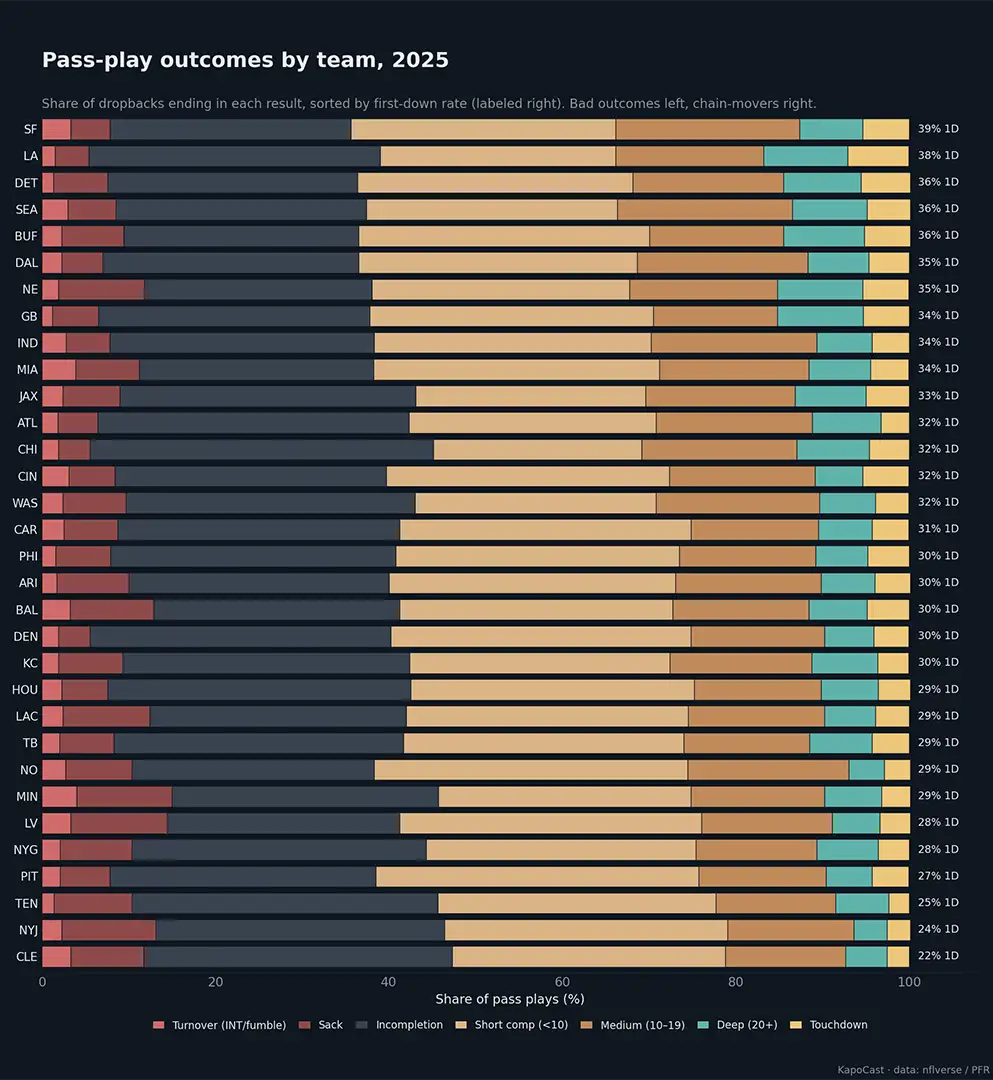
The red band on the left edge is self-inflicted damage, sacks and turnovers, the plays where the offense beat itself. The single clearest divider between a good passing offense and a bad one, across the whole league, isn’t arm talent or scheme, it’s the width of that red band full of bad plays. The best offenses keep it thin and let the gold touchdown chunk grows. The worst ones hand the defense free points and opportunities over and over and wonder why the drives stall.
Back to the Tent
Which is where Jaxson Dart comes back in, jogging out of the blue medical tent to throw a touchdown on the next snap. That sequence is going to define his season one way or the other, and it’s the same fork the whole young cohort is standing at. The talent is real, nobody’s arguing that. The pocket is going to fail, sometimes because the guys in front of him aren’t good enough and sometimes because he made it fail. And the only thing that decides whether he’s Drake Maye or a cautionary tale is whether somebody can teach him the least glamorous skill in football before it teaches him the hard way.
Just throw it away, guys.